Imagine trying to find a specific grain of sand on a vast beach. With a traditional computer, you’d have to check every single grain one by one—a process that could take centuries. But what if you could scan the entire beach in a single heartbeat? That is the promise of the quantum era.
In my decade-plus of navigating the high-stakes world of HealthTech, I’ve seen classical computers struggle to simulate complex molecular interactions for new drug discoveries. We often hit a “computational wall” where the math simply becomes too heavy for even the most powerful silicon chips. That’s when I realized that we don’t just need faster computers; we need a completely different way to speak to them. We need quantum programming languages.
If you think coding is just about 1s and 0s, prepare to have your mind expanded. We are moving from the world of “Either/Or” to the world of “And,” and the languages we use to get there are nothing short of mathematical poetry.
The Quantum Leap: Why Bits Aren’t Enough
To understand quantum programming languages, we first have to understand the strange nature of the “hardware” they control. Classical computers use bits (think of a light switch that is either ON or OFF).
The Coin Analogy
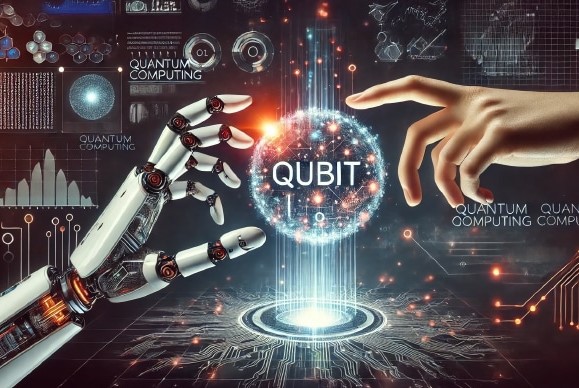
Think of a classical bit like a coin lying on a table. It is either Heads or Tails. Now, imagine a qubit (a quantum bit) as a coin spinning rapidly on the table. While it’s spinning, it is technically both Heads and Tails at the same time. This state is called Superposition.
Quantum languages allow us to write “recipes” (algorithms) that manipulate these spinning coins before they land. By the time the coin stops spinning, the quantum computer has explored millions of possible outcomes simultaneously.
1. The Landscape of Quantum Programming Languages
When I first dipped my toes into quantum code, I expected it to look like Python or C++. I was wrong. Early quantum coding was more like drawing circuit diagrams. However, we have since moved toward high-level languages that allow us to focus on the logic rather than the physics.
Q# (Q-Sharp) by Microsoft
Microsoft took a bold step by creating a language that feels familiar to enterprise developers. Q# is an open-source, high-level language specifically designed for quantum algorithms. In my experience, its greatest strength is its integration with Visual Studio, allowing you to simulate quantum code on your regular laptop before deploying it to actual quantum hardware.
Qiskit by IBM
If Q# is the “Enterprise” choice, Qiskit is the “Community” choice. Based on Python, Qiskit is an SDK that allows you to build quantum circuits using code that looks very similar to standard data science libraries. I’ve seen small HealthTech research teams use Qiskit to run their first experiments on IBM’s real quantum processors via the cloud.
2. Technical Pillars: Entanglement and Gates
To be effective in this niche, you need to understand two technical concepts that serve as the “syntax” for most quantum programming languages:
-
Logic Gates: In classical coding, you have AND, OR, and NOT gates. In quantum coding, we use Hadamard Gates (to put a qubit into superposition) and CNOT Gates (to flip a qubit based on the state of another).
-
Entanglement: This is what Einstein called “spooky action at a distance.” Quantum languages allow us to link two qubits so that the state of one instantly influences the other, regardless of distance. This is the secret sauce for quantum cryptography and ultra-fast data transfer.
3. Why HealthTech is Obsessed with Quantum Code
You might wonder why a HealthTech writer is talking about quantum physics. The answer lies in Molecular Simulation.
Classical computers cannot accurately simulate a caffeine molecule, let alone complex proteins. Why? Because the atoms themselves behave according to quantum mechanics. Using quantum programming languages, we can write code that “mimics” the way nature actually works. This could reduce the time it takes to develop a life-saving vaccine from ten years to just ten weeks.
4. The Challenges: Noise and Error Correction
Here is a bit of “insider” reality that you won’t find in the hype-filled headlines. Quantum computers are incredibly sensitive. A tiny change in temperature or a stray electromagnetic wave can cause Decoherence, where the “spinning coin” crashes prematurely.
Current quantum programming languages spend a huge amount of effort on Error Correction. Unlike classical code, where a bug is just a mistake in logic, a “bug” in quantum code can be caused by the physical environment of the room. As an intermediate developer, learning how to mitigate this “noise” through code is your most valuable skill.
5. Expert Advice: The “Hidden Warning” for Beginners
I’ve seen many brilliant classical coders fail at quantum programming because they try to force “Linear Logic” onto a “Non-Linear” system.
Tips Pro: Don’t start by trying to build a quantum app. Start by learning Linear Algebra. Quantum programming is essentially high-level math disguised as code. If you understand vectors and matrices, the code will make sense. If you don’t, it will look like gibberish.
Beware of the “Quantum Supremacy” hype. While the languages are ready, the hardware is still in its “Vacuum Tube” era. We are currently in the NISQ (Noisy Intermediate-Scale Quantum) era. Don’t expect to run your entire company database on a quantum computer yet; focus on specific optimization problems.
6. How to Start Your Quantum Journey Today
If you want to be a pioneer in this field, here is a scannable roadmap to get your hands on quantum programming languages:
-
Learn Python: Since Qiskit and many other libraries are Python-based, this is your foundation.
-
Use the Cloud: You don’t need a multi-million dollar fridge in your basement. Use IBM Quantum Experience or Azure Quantum to run code on real hardware for free.
-
Study Algorithms: Learn about Shor’s Algorithm (which can break modern encryption) and Grover’s Algorithm (which searches databases at lightning speed).
-
Join a Community: The quantum world is small but incredibly helpful. Participate in “Quantum Hackathons” to see how others are solving real-world problems.
Summary: Coding the Fabric of Reality
Quantum programming languages represent the ultimate frontier of human logic. We are moving away from telling computers how to calculate and moving toward showing them how to exist in multiple states at once.
For the professionals of tomorrow, these tools aren’t just about speed; they are about solving the “unsolvable” problems in medicine, climate change, and artificial intelligence. The beach is vast, and the grains of sand are many, but for the first time in history, we have the language to find exactly what we’re looking for.
Are You Ready for the Qubit?
The transition from classical to quantum is like the transition from a candle to a lightbulb—it doesn’t just change the brightness; it changes what we can do after the sun goes down. What industry do you think will be disrupted first by quantum computing? Healthcare, Finance, or Cybersecurity? Let’s start a conversation in the comments below!
