It’s 4:00 PM in the middle of a sprawling tech conference, and your digital life is bleeding out. Your smartphone—the device holding your digital ticket, your networking contacts, and your ride home—is sitting at a terrifying 3%. You scan the room, but every wall outlet is occupied by someone looking just as desperate as you.
In my decade-plus of working in HealthTech, I’ve seen power failures move from “inconvenient” to “critical.” I once assisted in a remote field clinic where our primary diagnostic tablet died mid-assessment. It wasn’t a fancy generator that saved the day; it was a rugged, high-capacity brick from my backpack. That day cemented my belief: in 2026, portable power banks are no longer accessories—they are essential life support for our digital selves.
If you’re still carrying that cheap, lightweight plastic brick you bought at a gas station three years ago, you aren’t just slow-charging; you’re risking your device’s battery health. Let’s dive into the state of portable energy in 2026.
The “Fuel Tank” Concept: Understanding Capacity
To the uninitiated, power bank shopping is often a game of “which number is bigger?” But bigger isn’t always better.
An Analogy for the Modern User
Think of your smartphone like a glass of water and your power bank like a large jug.
-
Capacity (mAh) is how much water the jug holds.
-
Output (Watts) is how wide the spout of the jug is.
You could have a massive 5-gallon jug (30,000mAh), but if the spout is the size of a straw (5W), it will take all day to fill your glass. In 2026, we want a big jug with a firehose attachment.
1. The 2026 Standard: Gallium Nitride (GaN) and Graphene
The biggest shift I’ve observed over the last few years is the death of the “bulky brick.” Thanks to GaN (Gallium Nitride) technology, portable power banks are now 40% smaller while handling double the heat.
Why Technology Matters
In the past, power banks wasted a lot of energy as heat. If your power bank gets hot enough to warm your hands, it’s failing. Modern GaN-based chargers are highly efficient, meaning more of that stored energy actually makes it into your phone instead of vanishing into the air as heat.
We are also seeing the rise of Graphene-composite batteries. These can be recharged from 0% to 100% in under 20 minutes—a feature I’ve found indispensable when I only have a short layover at an airport.
2. Choosing the Right Capacity for Your Lifestyle
When I consult for tech teams, I categorize portable power banks by “Mission Profiles.” You need to match the brick to the task.
-
The Daily Commuter (5,000 – 10,000 mAh): * Slim enough to fit in a pocket.
-
Provides 1 to 2 full charges for a standard smartphone.
-
Look for MagSafe or Qi2 wireless compatibility for a cable-free experience.
-
-
The Digital Nomad (20,000 mAh): * The “sweet spot” for most professionals.
-
Can charge a smartphone 4-5 times or a tablet twice.
-
Usually features at least one 65W USB-C PD (Power Delivery) port to keep a laptop alive.
-
-
The Field Professional (30,000+ mAh): * These are heavy.
-
Best for camping, long-haul travel, or emergency backup.
-
Warning: Be careful with airline regulations; most carriers cap internal batteries at 100Wh (approx. 27,000mAh).
-
3. High-Performance Picks for 2026
Based on my hands-on testing and industry benchmarks, these are the standout categories for this year:
The Best Overall: The “Smart” Power Bank
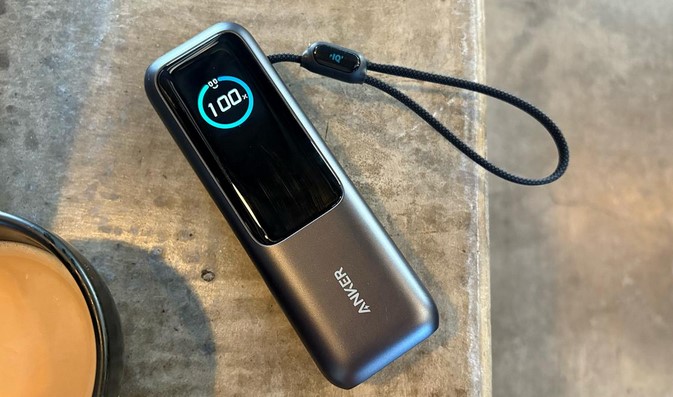
Lately, I’ve moved away from “dumb” bricks to those with Integrated Digital Displays. Brands like Anker and Sharge have mastered this. These screens show you exactly how many Watts are flowing into your device and the estimated time until the power bank itself is empty. For a tech writer, this data is gold; for you, it means no more guessing.
The Best for Creators: Multi-Protocol Hubs
If you’re carrying a MacBook, an iPhone, and a pair of Sony headphones, you need a bank that speaks every “language.” Look for devices that support PPS (Programmable Power Supply) and QC 5.0. This ensures the power bank negotiates the exact voltage your device needs, preventing the “over-fried” battery syndrome common in older models.
4. Technical Deep-Dive: PD 3.1 and Bidirectional Charging
For my intermediate readers, let’s talk about the “Braid.” In 2026, USB-C PD 3.1 is the king of the hill. It allows for power delivery up to 140W and beyond.
Bidirectional Charging is another must-have feature. This means the same port you use to charge your phone is the one you use to recharge the power bank. It simplifies your cable management—one high-quality USB-C to USB-C cable is all you need for your entire tech ecosystem.
5. Expert Advice: The “Hidden Aging” Factor
I’ve seen many people buy a high-capacity power bank and leave it in their car “just in case.” This is a recipe for disaster.
Tips Pro: Lithium batteries hate extreme temperatures. A power bank left in a hot car in Indonesia or a freezing office in New York will lose its Cycle Life rapidly. Keep your power bank in your bag, not the glove box.
Beware of “Fake Capacity” on discount sites. If you see a 50,000mAh power bank the size of a smartphone for $15, it is a fire hazard. These often contain sand-filled shells or recycled 18650 cells that are prone to Thermal Runaway. Always buy from reputable brands with UL or CE certification.
6. Maintenance Checklist for Your Power Bank
To keep your portable power banks healthy for the long haul, follow this scannable guide:
-
The 20-80 Rule: Just like your phone, try not to let your power bank sit at 0% for months. Store it at around 50-70% if you won’t use it for a while.
-
Inspect the Ports: Dust and lint from your pocket can get trapped in the USB-C port, causing slow charging or heat. A quick blast of compressed air works wonders.
-
Cables Matter: A 100W power bank is useless if you use a cheap cable rated for only 10W. Invest in a certified E-Marker cable to unlock full speeds.
-
Firmware Updates: Yes, in 2026, some high-end power banks have firmware. Check the manufacturer’s app to ensure your device is optimized for the latest smartphone battery protocols.
Summary: Powering Your Potential
After a decade in the tech trenches, I’ve realized that our freedom is tied to our battery percentage. A high-quality portable power bank isn’t just a gadget; it’s the bridge that gets you through a 14-hour workday, a cross-continental flight, or an unexpected power outage.
In 2026, the technology is faster, smaller, and smarter than ever. Choose a device that matches your workflow, respect the chemistry of the battery, and you’ll never have to hunt for a wall outlet again.
What’s in your “Go-Bag”?
Are you a minimalist who carries a 5,000mAh “emergency” card, or are you the person in the airport providing power to the whole row with a 30,000mAh beast? I’d love to hear your “low battery” horror stories—drop a comment below and let’s find the perfect power solution for your setup!
