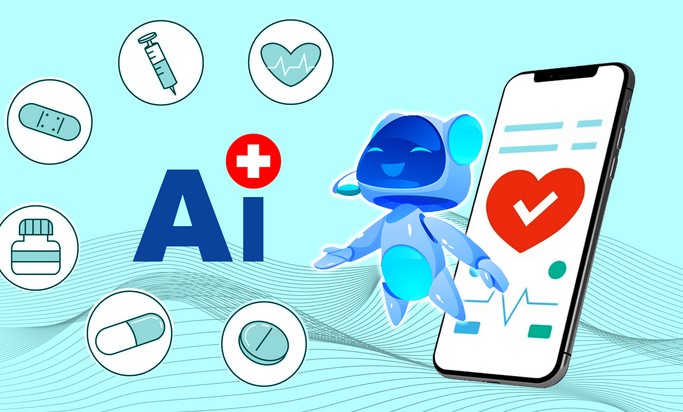
 A few years ago, I sat in a crowded hospital waiting room, watching a frantic nurse juggle a stack of paper charts while trying to comfort a visibly distressed patient. It was a classic scene of healthcare gridlock—brilliant medical minds bogged down by administrative quicksand. Fast forward to today, and that same hospital is triaging patients using smartphones.
Over my ten years writing at the intersection of technology and medicine, I have witnessed plenty of overhyped buzzwords. But the shift we are seeing right now isn’t just hype. AI powered healthcare apps are fundamentally changing how we manage our health, turning passive patients into proactive CEOs of their own well-being.
Whether you are a patient looking to navigate your health journey or a tech enthusiast curious about the future of medicine, let’s dive into how artificial intelligence is making healthcare smarter, faster, and deeply personalized.
How AI Powered Healthcare Apps are Rewriting the Medical Playbook
For decades, medicine followed a reactive formula: you get sick, you visit a doctor, you get a prescription. It was a system built on fixing broken parts. Today, intelligent applications are flipping this script entirely.
To understand how an AI app works, think of it as a digital co-pilot for your doctor. It doesn’t replace the pilot (the physician), but it scans the horizon, processes millions of data points in milliseconds, and flags potential turbulence before it happens.
These apps leverage Machine Learning (ML) and Natural Language Processing (NLP) to analyze everything from your daily step count to the subtle irregularities in your heart rate. By transforming raw data into actionable medical insights, they allow for a level of continuous care that was physically impossible a decade ago.
The Core Pillars of Smart Patient Care
The universe of digital health is vast, but the most impactful apps generally fall into three distinct categories. Let’s break down how they actually work under the hood.
1. Virtual Assistants and Symptom Checkers
We have all been guilty of typing symptoms into a search engine at 2 AM, only to be convinced we have a rare, tropical disease. AI symptom checkers offer a sane alternative.
Instead of throwing a wall of terrifying search results at you, these apps use clinical decision support systems to ask dynamic, follow-up questions. They mimic the initial triage process of an emergency room, guiding you to the right level of care—whether that’s an urgent care visit or just a good night’s sleep.
2. Chronic Disease Management and Remote Monitoring
Managing conditions like diabetes or hypertension used to mean keeping messy paper logs and hoping for the best between six-month checkups.
Modern mHealth (mobile health) applications connect directly to wearable devices to track biomarkers in real-time. If your blood glucose spikes or your blood pressure drops, the app doesn’t just log it—it alerts your medical team automatically.
3. Mental Health Companions
The shortage of mental health professionals is a global crisis. While they cannot replace human therapists, AI chatbots trained in Cognitive Behavioral Therapy (CBT) principles provide a crucial safety net. They offer immediate, stigma-free coping mechanisms for anxiety and stress at any hour of the day.
+-------------------------+-----------------------------------+-----------------------------------+
| App Type                | Core Technology                   | Primary Benefit                   |
+-------------------------+-----------------------------------+-----------------------------------+
| Symptom Checkers        | Natural Language Processing (NLP) | Reduces unnecessary ER visits      |
| Chronic Monitoring      | Predictive Analytics & IoT        | Prevents dangerous health spikes  |
| Mental Health Bots      | Generative AI & CBT Algorithms    | 24/7 accessible emotional support |
+-------------------------+-----------------------------------+-----------------------------------+
Behind the Screen: The Tech Making it Possible
When you interact with a clean, user-friendly interface on your phone, there is an incredibly sophisticated tech stack working behind the scenes.
-
Predictive Analytics: This is the crystal ball of healthcare tech. By evaluating your historical health data, the AI can predict potential health risks before symptoms even manifest.
-
Computer Vision: Have you ever taken a photo of a strange rash and uploaded it to a dermatology app? That’s computer vision at work. The app compares your photo against a database of millions of dermatological images to assist in identifying anomalies.
-
Electronic Health Record (EHR) Integration: The best apps don’t operate in a vacuum. They securely feed data directly into your hospital’s main database, ensuring your primary care doctor always has the full picture.
Insider Insights: The Reality of Digital Medicine
💡 Pro Tip: Look for FDA Clearance
Not all health apps are created equal. If you are using an app to manage a serious medical condition, check if it has received FDA clearance (or equivalent regulatory approval in your country). There is a massive difference between a wellness tracker that counts steps and a regulated digital therapeutic that calculates insulin dosages.
While I am incredibly optimistic about this technology, my decade in the industry has taught me to look at the gaps as closely as the breakthroughs. The elephant in the room is always data privacy.
Healthcare data is highly sensitive, making it a prime target for cyber threats. When choosing an app, always look for explicit mentions of HIPAA compliance and robust data encryption standards. If an app’s privacy policy is vague about how your health data is monetized, walk away.
Embracing the Future of Healthcare
We are moving away from a world where health is something you only think about when you are sick. The integration of ai powered healthcare apps into our daily routines marks the beginning of truly democratized, personalized medicine.
These tools are shortening the distance between feeling a symptom and receiving accurate care. They free up doctors to focus on what they do best—the human, empathetic element of healing—while the algorithms handle the heavy lifting of data analysis.
The future of medicine isn’t waiting in a hospital corridor; it’s sitting right there in your pocket.
What’s Your Take?
Have you ever used an AI app to check a symptom or track your health goals? Did it give you peace of mind, or did it make you miss traditional doctor visits? Drop your thoughts and experiences in the comments below—I’d love to chat with you about it!
