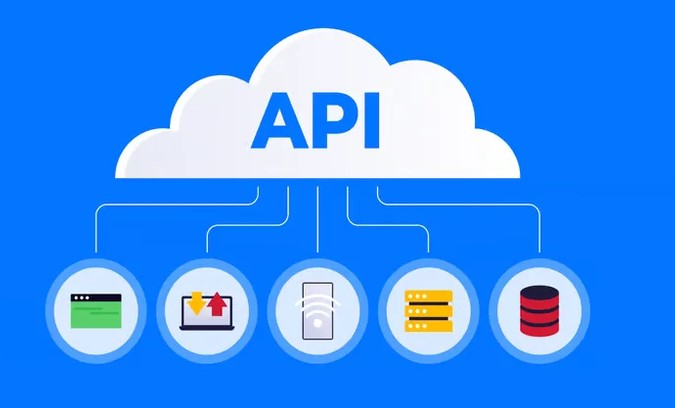
Back in 2018, during a major patient-portal overhaul for a regional hospital network, our engineering team hit a catastrophic bottleneck. We had 14 different microservices—from real-time heart monitor telemetry to electronic health records (EHR)—trying to communicate with three separate mobile applications. Without a central controller, our architecture looked like a giant bowl of tangled spaghetti, resulting in random service outages, rate-limit crashes, and security vulnerabilities that kept us up at 2 a.m.
That painful deployment was my turning point. It made me realize that writing brilliant code is only half the battle; controlling how that code communicates with the outside world is where modern software thrives or dies.
In today’s cloud-native landscape, cloud api management is no longer a luxurious architectural add-on. It is the central nervous system of modern digital infrastructure.
What Is Cloud API Management? (The Airport Control Tower Analogy)
To understand why managing Application Programming Interfaces (APIs) in the cloud is so vital, let’s drop the dense engineering jargon for a moment.
Without Management: [Client Apps] === Chaos / Uncontrolled Traffic ===> [Backend Microservices]
With Management:    [Client Apps] ===> [ API Gateway (Traffic Control) ] ===> [Backend Microservices]
Imagine a international airport without a traffic control tower. Planes (data requests) would try to land on random runways at the same time, unauthorized aircraft could enter restricted airspace unchecked, and passengers would have no clear terminal signage. Chaos would ensue within minutes.
Cloud API management acts as that modern airport control tower. It sits between the clients requesting data (like mobile apps, IoT sensors, or third-party platforms) and your backend microservices. It inspects every incoming request, validates credentials, directs traffic to the correct runway, throttles overload spikes, and ensures smooth, secure landings every single millisecond.
Core Pillars of a Cloud API Management Platform
When evaluating or building an API infrastructure in the cloud, these four integrated components form the foundation of success:
1. The API Gateway
This is the operational engine room. The API gateway handles request routing, protocol translation (e.g., REST to gRPC), SSL termination, rate limiting, and caching. Instead of every microservice handling its own security and routing logic, the gateway centralizes these repetitive tasks.
2. Developer Portal
An API is only as good as the developers who build on it. A developer portal provides self-service onboarding, interactive documentation (like OpenAPI/Swagger specs), API key generation, and testing sandboxes. It turns internal code into an accessible product.
3. API Analytics and Observability
You cannot optimize what you do not measure. Real-time dashboards track metrics such as latency distributions, error rates (HTTP 4xx/5xx status codes), bandwidth consumption, and endpoint usage trends, allowing teams to catch bugs before end users notice them.
4. Policy and Lifecycle Management
From initial design and staging to deprecation and retirement, managing an API requires strict governance. Lifecycle management tools allow you to version APIs (e.g., v1 vs. v2) smoothly without breaking existing client integrations.
Why Legacy API Gateways Fail in Modern Cloud Environments
Having audited legacy monolithic architectures alongside cloud-native stacks, I frequently see teams try to force old on-premises hardware proxies into multi-cloud environments. The results are predictable: unexpected latency, high maintenance costs, and severe scaling friction.
| Architectural Feature | Legacy On-Prem Gateways | Modern Cloud API Management |
| Deployment Model | Fixed hardware / Static VMs | Serverless / Kubernetes-Native |
| Scalability | Manual provisioning (Slow) | Auto-scaling based on real-time traffic |
| Security Architecture | Perimeter-based security | Zero-Trust / OAuth2 / JWT / mTLS |
| Maintenance Overhead | High (Manual patching) | Low (Managed SaaS / Cloud Control Plane) |
| Global Reach | Restricted to local datacenters | Multi-region Edge / CDN integration |
Essential Security Protocols in Cloud API Management
Security in cloud environments cannot rely on blind trust. Every request must be authenticated, authorized, and inspected. Modern cloud management platforms enforce security through several key layers:
-
OAuth 2.0 & OpenID Connect (OIDC): The gold standard for delegated access, ensuring user credentials are never exposed directly to backend microservices.
-
JSON Web Tokens (JWT): Lightweight, digitally signed tokens passed in HTTP headers to verify user identity and permission scopes efficiently.
-
Mutual TLS (mTLS): Enforces two-way cryptographic authentication between the client and the gateway, ensuring neither side can be spoofed.
-
Rate Limiting & Throttling: Protects your databases from DDoS attacks and runaway loops by setting strict thresholds (e.g., 100 requests per minute per IP).
Incoming Request ==> [mTLS Verification] ==> [Rate Limit Check] ==> [JWT Validation] ==> [Backend Service]
Expert Advice: Pro Tips and Hidden Pitfalls
Pro Tip: Never hardcode rate limits or security policies directly into your microservice code. Define them as declarative policies inside your cloud api management gateway plane. This allows your security team to update policies globally in seconds without requiring developers to redeploy backend code.
Hidden Warning: The Zombie API Vulnerability
One of the greatest security threats facing growing organizations is the proliferation of Shadow and Zombie APIs. Zombie APIs are older, deprecated endpoints (like an unmonitored
/v1/users endpoint) left running after newer versions are deployed.Because they are forgotten, they rarely receive security patches, making them prime targets for automated exploit bots. A robust management tool regularly scans your traffic to catalog all active endpoints, ensuring forgotten APIs are decommissioned safely.
Choosing the Right Cloud API Solution
Selecting the best platform depends on your existing infrastructure ecosystem:
-
Hyperscaler Solutions (AWS API Gateway, Google Cloud Apigee, Azure API Management): Ideal for organizations deeply committed to a single cloud provider, offering native integration with cloud identity and serverless functions.
-
Decoupled / Multi-Cloud Platforms (Kong, Tyk, MuleSoft): Perfect for enterprises running hybrid architectures or Kubernetes clusters across multiple public clouds to avoid vendor lock-in.
The Future: AI-Driven API Governance
As we look deeper into the cloud ecosystem, artificial intelligence is reshaping how we manage data pipelines. AI-powered gateways can now automatically detect anomalous traffic patterns, dynamically adjust rate limits during unexpected traffic bursts, and automatically generate API documentation straight from code repos.
Simplifying connectivity is no longer just a developer convenience—it is the bedrock of fast, secure, and scalable modern businesses.
How Are You Managing Your API Architecture?
Is your organization struggling with tangled microservices, or have you already transitioned to a centralized cloud management platform? What is your biggest headache when connecting legacy systems to the cloud? Drop your thoughts, questions, or setup experiences in the comments below—let’s keep the conversation going!

Comments are closed.