Imagine staring at a computational problem so massive that if you pressed “Enter” on today’s most powerful supercomputer, you would have to wait longer than the age of the universe for an answer.
A few years ago, while working alongside a computational genomics team trying to model complex protein folding for targeted drug delivery, we hit that exact brick wall. Our high-performance servers whirred for days, churned through gigawatts of power, and barely made a dent. That was my front-row seat to the fundamental limit of classical computing.
When we talk about building quantum computers, we aren’t just talking about making faster laptops or sleeker smartphones. We are engineering a completely new way to process reality itself—one atomic state at a time.
Why Classical Computers Hit a Brick Wall
To appreciate the sheer scale of quantum computing, we first need to look at the machines sitting on our desks. Classical computers are remarkable, but at their core, they are simple counting machines.
Classical Bit:  [ 0 ]  OR  [ 1 ]       ---> Reads one path at a time
Quantum Qubit:  |0⟩  +  |1⟩  (Both!)   ---> Explores all paths simultaneously
Every photo you take, email you send, and password you type boils down to binary bits: tiny electronic switches that are either OFF (0) or ON (1).
Imagine walking through a massive maze. A classical computer searches for the exit by trying one path at a time. If it hits a dead end, it backtracks and tries the next. It does this millions of times per second, but it is still evaluating paths sequentially.
Quantum computing flips this script entirely.
The Quantum Difference: Qubits, Superposition, and Entanglement
Instead of classical bits, quantum systems rely on qubits (quantum bits). Thanks to two mind-bending principles of quantum mechanics, qubits behave unlike anything in our everyday macroscopic world:
-
Superposition: A qubit doesn’t have to choose between 0 and 1. It can exist as a mathematical combination of both states simultaneously. In our maze analogy, a quantum computer doesn’t try one path at a time—it walks down every possible path at the exact same time.
-
Entanglement: Einstein famously called this “spooky action at a distance.” When qubits become entangled, the state of one instantly dictates the state of another, no matter how far apart they are. This allows quantum processors to link information in ways classical transistors never could.
Together, superposition and entanglement create exponential processing power. Adding just one qubit doesn’t add one unit of power—it doubles the computation space.
The Core Roadblocks in Building Quantum Computers
If quantum computers are so revolutionary, why don’t we have one sitting in every hospital, bank, and tech firm today? Because physical implementation is a brutal engineering nightmare.
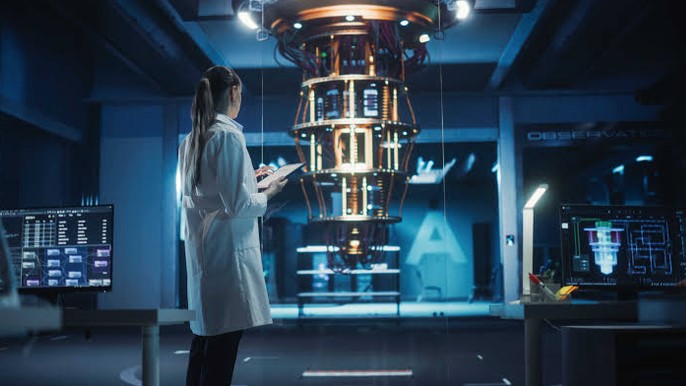
Having audited and observed hardware setups in specialized labs, I can tell you that the actual machines look less like sleek computers and more like giant, golden chandeliers hanging inside stainless-steel vacuum chambers.
  +--------------------------------------------------+
  |              Dilution Refrigerator               |
  |  Level 1: Room Temperature (300 K)               |
  |  Level 2: Liquid Nitrogen Cold (77 K)            |
  |  Level 3: Liquid Helium Cold (4 K)               |
  |  Level 4: Quantum Core (15 Millikelvin)          |
  +--------------------------------------------------+
                           |
                           v
       [ Extremely Sensitive Qubit Environment ]
Here are the three massive hurdles engineers face when building quantum computers:
1. The Fight Against Quantum Decoherence
Qubits are fragile. A tiny shift in temperature, a stray electromagnetic wave from a cell phone, or even a subtle mechanical vibration can cause a qubit to lose its quantum state—a disaster known as decoherence. When decoherence happens, the quantum calculation collapses back into messy, random classical data.
2. The Absolute Zero Requirement
To shield qubits from thermal noise, hardware teams must cool processors down to around 15 millikelvin (roughly -459°F). That is colder than deep space. Operating a dilution refrigerator capable of maintaining this environment requires staggering precision and constant monitoring.
3. High Error Rates and Quantum Error Correction
In classical computing, a bit flips by mistake once in every $10^{17}$ operations. In quantum systems, error rates can be as high as one in every few hundred operations. Because you cannot measure a qubit directly without collapsing its superposition (the observer effect), correcting these errors in real time requires clever workaround algorithms using hundreds of “physical” qubits just to create one reliable “logical” qubit.
Major Engineering Breakthroughs Scaling the Hardware
Despite these formidable barriers, the past few years have seen unprecedented breakthroughs that move quantum from theoretical physics into functional tech.
| Technology Approach | Key Advantage | Main Challenge | Leading Pioneers |
| Superconducting Qubits | Extremely fast gate speeds | Requires extreme sub-zero cooling | IBM, Google, Rigetti |
| Trapped Ion Systems | High stability and coherence time | Slower operation speed | IonQ, Quantinuum |
| Photonic Quantum | Operates at room temperature | Hard to force photons to interact | Xanadu, PsiQuantum |
| Topological Qubits | Built-in hardware error protection | Extremely hard to create physically | Microsoft |
Advanced Fault-Tolerant Architectures
We are officially transitioning from the NISQ (Noisy Intermediate-Scale Quantum) era to Fault-Tolerant Quantum Computing. Recent breakthroughs in neutral-atom traps and surface-code algorithms allow researchers to run complex logical operations across thousands of entangled physical qubits without immediate system collapse.
Hybrid Cloud Integration
You won’t need a cryogenic freezer in your basement. High-performance cloud platforms now bridge classical supercomputing with quantum backends. Developers can write code in standard Python libraries (like Qiskit or Cirq), send the job via API, and let a remote quantum processor run the heavy linear algebra before returning the result.
Expert Advice: Pro Tips and Hidden Misconceptions
Pro Tip: If you are a developer, researcher, or tech strategist looking to get ahead, do not wait for hardware perfection. Start learning quantum algorithms today using cloud simulators like IBM Quantum Platform or AWS Braket. The software stack is evolving much faster than the physical hardware.
Hidden Warning: The Quantum Cryptography Panic
A common fear in business boardrooms is that quantum computers will instantly break all global banking encryption tomorrow. While it is true that Shor’s Algorithm can theoretically crack RSA encryption, functional quantum code capable of doing so at scale is still years away. Furthermore, security standards bodies are already rolling out Post-Quantum Cryptography (PQC)—encryption methods designed specifically to resist quantum attacks.
The Road Ahead: Real-World Applications
The true magic of building quantum computers lies in solving problems that directly touch human lives:
-
Healthcare & HealthTech: Simulating complex molecular interactions at an atomic level to discover life-saving drugs in days rather than decades.
-
Material Science: Designing hyper-efficient battery chemistries for electric vehicles and clean energy grids.
-
Logistics & Climate: Optimizing global supply chains to drastically cut fuel consumption and carbon emissions.
We are watching a historical shift equivalent to the transition from vacuum tubes to silicon microchips in the 1950s. The journey is noisy, challenging, and undeniably difficult—but the destination will reshape technology forever.
What Is Your Take on the Quantum Revolution?
Do you think quantum computing will transform your industry within this decade, or do you feel the hardware challenges are still being understated? Leave a comment below, share your perspective, or ask a question—let’s build the conversation!
