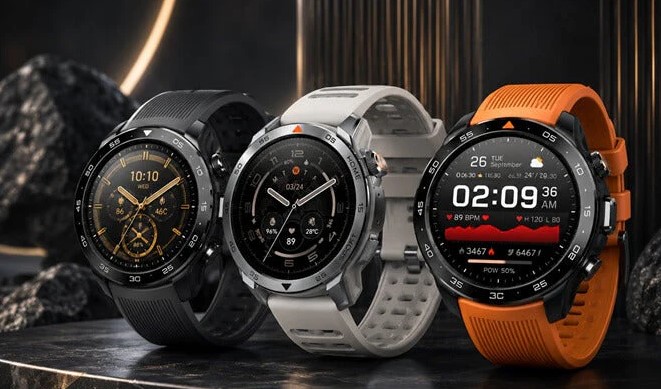
You wake up at 6:00 AM, lace up your running shoes, and step outside into the crisp morning air. You press “Start” on your wrist, smash your personal 5K record, and head home feeling like an absolute champion. But when you check your health app, it drops a devastating truth bomb: your device completely miscalculated your heart rate zones, missed half your route due to a dropped GPS signal, and now tells you that you burned a grand total of twelve calories.
Over my ten years as a HealthTech writer and workspace deployment specialist, I have tested hundreds of medical-grade sensors and wearables. If there is one piece of advice I find myself constantly repeating to clients, athletes, and friends alike, it is this: bad data is worse than no data.
In 2026, smartwatches for fitness have transcended beyond simple step-counters. They are now deeply integrated ecosystem hubs that act as digital health coaches on your wrist. Whether you are a beginner looking to move more or an intermediate runner eyeing a half-marathon, picking the right partner for your wrist is the ultimate productivity hack for your body.
The Core Blueprint: How Health Tech Translates Your Body
To truly understand how modern smartwatches for fitness work, think of your wearable as a dedicated translator. Your body speaks in biological whispers—micro-fluctuations in blood flow, skin temperature shifts, and electrical pulses.
The watch uses a process called photoplethysmography (PPG)—shining light into your blood vessels to measure how fast your heart pumps. It then takes this raw physiological language and converts it into clean, actionable metrics like Vo2 Max, Sleep Quality scores, and heart rate variability (HRV).
When you purchase a high-quality smartwatch, you aren’t just buying a screen; you are investing in the proprietary algorithms that translate those complex numbers into clear instructions on when to push hard and when to rest.
The Heavyweights of 2026: Top Models Reviewed
The wearable market in 2026 has distinct champions tailored to specific ecosystems and user goals. Let’s break down the best options available right now for beginner and intermediate users.
1. Garmin Venu 3: The All-Around Fitness Champion
If your primary focus is pure fitness tracking balanced with everyday lifestyle features, the Garmin Venu 3 remains the gold standard.
-
The Big Draw: It features Garmin’s signature “Body Battery” metric, which calculates your energy levels by analyzing your sleep, stress, and workouts. It tells you precisely how much gas you have left in the tank.
-
Display: A stunning, ultra-bright AMOLED touchscreen that is incredibly easy to read under direct sunlight.
-
Battery Life: Unlike standard smartwatches that die in 24 hours, the Venu 3 easily cruises past a full week on a single charge.
2. Apple Watch Series 11: The Seamless Ecosystem King
For iPhone users who want a device that handles corporate emails just as smoothly as a high-intensity interval training (HIIT) session, the newly released Apple Watch Series 11 is an unmatched powerhouse.
-
Advanced Health Metrics: Building on the clinical success of the previous generation, the Series 11 offers deep Edge-AI wellness tracking, advanced sleep coaching, and FDA-cleared irregular heart rhythm alerts.
-
Precision Tracking: Features enhanced dual-frequency GPS algorithms that ensure your city runs or trail hikes map out perfectly without jagged tracking lines.
-
The Catch: The battery life still hovers around the 1.5 to 2-day mark, meaning a daily charging routine is mandatory.
3. Samsung Galaxy Watch 8: The Android Powerhouse
Samsung has solidified its place as the premier choice for Android and ecosystem loyalists with the Galaxy Watch 8.
-
Body Composition Analysis: This device uses Bioelectrical Impedance Analysis (BIA) to measure your body fat percentage, skeletal muscle mass, and metabolic rate directly from your wrist.
-
AI Coaching: It pairs seamlessly with modern Wear OS architectures to provide automated workout recognition and proactive health notifications.
4. Fitbit Charge 6: The Best Budget Tracker for Beginners
Not everyone wants a bulky mini-computer on their wrist. If you want something lightweight, affordable, and incredibly intuitive, the Fitbit Charge 6 is a stellar pick.
-
Simplicity First: The companion app is arguably the most beginner-friendly platform on the market, translating data into easy-to-read graphs.
-
Feature Rich: Despite its small profile, it packs built-in GPS, Google Wallet, and robust sleep stage tracking.
Side-by-Side: Finding Your Perfect Fitness Match
Choosing a device depends entirely on your phone preference, budget, and how deeply you want to analyze your data.
| Smartwatch Model | Best Suited For | Key Strength | Battery Life |
| Garmin Venu 3 | Overall Fitness & Recovery | Body Battery & Sensor Accuracy | Up to 10 Days |
| Apple Watch Series 11 | iPhone Users / Smart Features | Seamless UI & Advanced Health Eco | 36–48 Hours |
| Samsung Galaxy Watch 8 | Android Users / Gym Enthusiasts | BIA Body Composition Tracking | 40–50 Hours |
| Fitbit Charge 6 | Beginners & Minimalists | Simple UI & Long Battery Life | Up to 7 Days |
Expert Advice: Getting the Most Out of Your Wearable
Buying the tech is only step one. Throughout my years deploying health tracking systems, I have noticed that most users only utilize about 10% of their device’s actual capabilities.
Pro Tip: Dial In Your Sleep Windows
Most smartwatches use your baseline resting heart rate (RHR) during deep sleep to calculate your daily recovery metrics. If you do not set your accurate, consistent sleep windows inside the app settings, the watch will mistake late-night couch lounging for sleep. This skews your recovery scores and gives you inaccurate baseline data.
The Traeger Trap (What to Avoid)
Do not treat your calorie burn estimation as absolute gospel law. No wrist-based wearable can perfectly calculate precise caloric expenditure; they are statistical estimations based on your movement and heart rate. Use the calorie metric as a trend line to measure if you are working harder over time, rather than an exact mathematical number for your diet tracking.
The Pitfalls of Sensor Placement
Before you return a watch because you think the heart rate monitor is broken, make sure you aren’t committing the number one mistake of wearable beginners: poor wrist positioning.
-
The Correct Fit: Your smartwatch should sit roughly one finger-width above your wrist bone (towards your elbow).
-
The Tightness Rule: It needs to be snug enough that it doesn’t slide around when you shake your arm, but not so tight that it leaves deep indentations in your skin.
-
The Sweat Cleanse: Modern optical sensors can easily get blocked by built-up sweat, dead skin cells, or dried workout lotion. Wipe the sensor array on the back of the watch case down with a microfiber cloth at least once a week to keep the optical channel crystal clear.
Conclusion: Take Charge of Your Health Journey
Investing in a proper fitness companion isn’t about chasing tech trends—it’s about building accountability into your everyday life. A great smartwatch doesn’t do the hard work for you, but it shines a bright light on the path to your goals, showing you exactly how your habits change your health.
Are you looking to upgrade your current setup, or are you picking out your very first fitness tracker? What feature matters most to you—battery life, precise GPS mapping, or lifestyle smart features? Drop your thoughts in the comments below, and let’s find the perfect device to supercharge your health journey!
