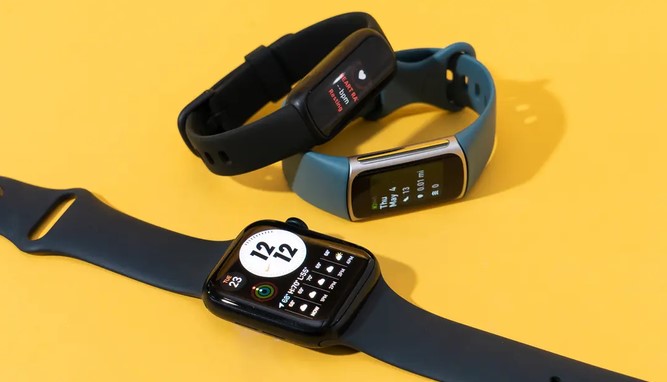
Imagine waking up, hitting the gym for an intense high-intensity interval session, and checking your wrist—only for your device to congratulate you on hitting 10,000 steps while completely missing the fact that your central nervous system is on the brink of exhaustion.
Over my past decade analyzing biosensors, evaluating health tech hardware, and testing early engineering prototypes, I’ve seen millions of fitness enthusiasts fall into this exact trap.
We spent years worshipping vanity metrics like raw step counts and estimated calorie burns. But here is the stark reality: counting steps without measuring physiological strain is like tracking a car’s journey by counting tire rotations while ignoring the engine light.
The game has changed. In 2026, wearable fitness tech has transcended passive counting. We have officially entered the era of predictive, continuous metabolic and autonomic tracking—moving from reactive logging to real-time personal optimization.
The 2026 Paradigm Shift: From Step Counters to Biomarker Labs
Remember when a fitness tracker was just a plastic band housing a basic accelerometer? You had to tap it, sync it over glitchy Bluetooth, and interpret arbitrary scores that told you very little about your actual recovery.
+-------------------------------------------------------------+
|                THE EVOLUTION OF FITNESS TECH                |
+-------------------------------------------------------------+
| Traditional Trackers   -->  Measures Activity (Steps/Raw HR)|
| Modern Wearables (2026)-->  Measures Physiology (HRV/Metabolism)
| Integrated Ecosystem   -->  Predictive Health & Real-time AI|
+-------------------------------------------------------------+
Today’s hardware architecture relies on multi-wavelength optical sensors, bioimpedance arrays, and micro-NPU (Neural Processing Unit) chips embedded directly into smartwatches, smart rings, and skin patches.
Modern wearable fitness tech doesn’t just record what your body did five hours ago; it analyzes your autonomic nervous system to tell you how much strain you can handle today.
How Modern Wearable Fitness Tech Decoding Your Body
To appreciate how far consumer health tech has come, it helps to look under the hood at the core metrics driving modern bio-tracking.
1. Heart Rate Variability (HRV) & Autonomic Balance
While standard heart rate counts beats per minute, Heart Rate Variability (HRV) measures the microscopic time variations between consecutive heartbeats.
Controlled by your Autonomic Nervous System (ANS), a higher HRV typically indicates a well-recovered body dominated by the parasympathetic (“rest and digest”) branch. A sudden dip signals high sympathetic (“fight or flight”) stress, alerting you to incoming fatigue, overtraining, or early illness before physical symptoms appear.
2. Continuous Photoplethysmography (PPG) Arrays
Modern optical sensors use multi-spectrum LEDs (green, red, and infrared) that penetrate deeper tissue layers.
-
Green Light: Tracks capillary blood flow for real-time pulse rate during workouts.
-
Red & Infrared Light: Measures how oxygenated your blood is ($\text{SpO}_2$) and monitors peripheral micro-circulation patterns.
3. Non-Invasive Continuous Glucose & Lactate Monitoring
One of the most exciting breakthroughs in 2026 is the integration of transdermal optical and microfluidic sensing for metabolic health. Rather than pricking a finger, high-end wearables monitor interstitial fluid fluctuations to give real-time glucose stability scores and lactate threshold warnings during exertion.
Analogy: Think of your body like a high-performance sports car. Old fitness trackers acted like a simple odometer—they just told you how far you drove. Modern wearable fitness tech acts like a master engine diagnostic scanner, showing fuel efficiency, engine temperature, oil pressure, and structural stress in real time.
Key Benefits for Beginners and Intermediate Athletes
You don’t need to be an Olympic marathoner to harness the power of modern health metrics. Continuous biomarker tracking delivers practical benefits for everyday fitness goals.
Overtraining Prevention and Injury Reduction
By monitoring your baseline recovery trends, wearable algorithms dynamically adjust your daily activity targets. If your recovery score drops into the red, your device advises an active recovery walk instead of a heavy weightlifting session, preventing burnout and overuse injuries.
Optimized Sleep Architecture
Modern wearables track sleep stages—light, deep, and REM—alongside core body temperature shifts and respiratory rate. Seeing how late-night meals or evening alcohol consumption disrupts deep sleep helps you make smarter lifestyle choices.
Targeted Energy Zone Training
Instead of guessing your effort level, real-time heart rate zone alerts keep you in your target aerobic or anaerobic thresholds, ensuring your cardio workouts deliver maximum cardiovascular adaptation.
Pro Tips & Hidden Pitfalls: A HealthTech Veteran’s Guide
Having stress-tested hundreds of consumer health devices over the last 10 years, I can tell you that marketing claims often hide important real-world nuances.
Pro Tips for Maximum Accuracy
-
Tattoo and Skin Contact Warning: Optical PPG sensors rely on light passing through skin. Heavy dark wrist tattoos, dense body hair, or loose bands scatter light signals, causing massive heart rate spikes during workouts. Wear your device one finger-width above the wrist bone and pull it snug during exercise.
-
Establish Your Baseline for 14 Days: Never trust out-of-the-box readiness scores on day one. Allow your wearable at least two weeks to establish your unique physiological baseline for HRV, resting heart rate, and skin temperature.
-
Prioritize Recovery Trends Over Daily Scores: Single-day metrics can fluctuate due to minor variables. Look at 7-day and 30-day moving averages to judge whether your fitness is truly trending upward.
Hidden Pitfalls to Avoid
-
The “Calorie Burn” Myth: Consumer wearables remain notorious for miscalculating active calorie expenditure, often overestimating or underestimating burn rates by 15% to 30%. Never use your tracker’s calorie burn number to justify overeating.
-
Anxiety Driven by Data (Orthosomnia): Obsessively checking recovery scores can cause real stress, creating a self-fulfilling prophecy where worry over a “bad” recovery score ruins your actual sleep. Treat your device as a guide, not an absolute ruler.
-
Ignoring Physical Body Signals: If your wearable app claims you are 100% recovered but your joints ache and your energy feels zeroed out, trust your intuition over the screen.
The Horizon: Predictive AI Health Companions
Where is personal fitness tracking heading over the coming years? The convergence of localized machine learning and continuous sensing is setting up a massive leap forward.
+---------------------------------------------------------------+
|                 THE FUTURE OF WEARABLE TECH                   |
+---------------------------------------------------------------+
| Multi-Biomarker Sensing --> Continuous HRV, Glucose & Temp   |
| On-Device AI Models    --> Offline, Instant Health Guidance   |
| Predictive Diagnostics --> Early Illness Detection Days Ahead |
+---------------------------------------------------------------+
Future wearable fitness tech won’t just report data; it will act as an active, conversational AI coach. By analyzing real-time biometric inputs against your historical data, on-device AI models will dynamically tailor your hydration needs, suggest optimal workout times, and detect viral infections days before you cough.
Final Thoughts
Adopting modern wearable fitness tech is no longer about collecting digital badges or obsessing over 10,000 steps. It is about building a precise, personalized map of your internal health. By leveraging heart rate variability, sleep quality metrics, and metabolic trends, you transform raw data into actionable daily habits that fuel long-term vitality.
Over to You: Are you currently using a smartwatch, smart ring, or metabolic patch to track your workouts? What is the single health metric that has made the biggest impact on your daily routine? Drop your thoughts and questions in the comments below!
