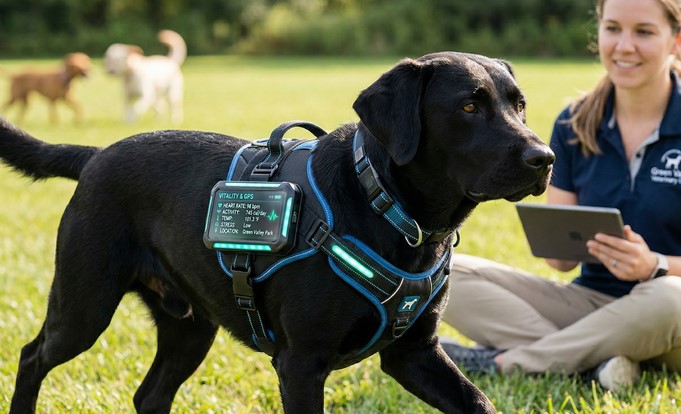
It was 2:00 AM when my golden retriever, Leo, started restlessly pacing near the foot of my bed. To the untrained eye, he just seemed mildly annoyed or unable to find a cozy sleeping spot. But my smartphone had already vibrated two minutes earlier with a low-level anomaly alert: a 40% spike in resting heart rate combined with subtle, repetitive micro-tremors detected by his smart collar.
We made it to the emergency vet clinic just in time to catch an acute gastrointestinal blockage before it escalated into a critical emergency.
Over my past decade writing about emerging health technology, evaluating biosensors, and testing connected devices, I’ve tracked the slow evolution of human wearables closely. But the quiet revolution happening around our pets’ necks has caught many by surprise.
Our four-legged family members can’t verbally tell us when they are in pain, exhausted, or developing a chronic illness. Smart wearables for pets are bridging that communication gap, transforming pet care from reactive emergency visits to proactive, data-driven health management.
The Pet Tech Boom: Why Collars Are Getting Brighter
For decades, a pet collar had two simple jobs: hold an ID tag and clip onto a leash. Today, pet health monitoring is undergoing the exact same biometric explosion that human wearables experienced a decade ago.
+-------------------------------------------------------------+
|                TRADITIONAL VS. SMART PET TECH               |
+-------------------------------------------------------------+
| Traditional Collars --> Basic Identification & Restraint    |
| Smart Pet Wearables  --> Continuous Biometrics & Tracking    |
| Combined Ecosystem   --> Early Disease Detection & Safety   |
+-------------------------------------------------------------+
Pets excel at masking physical discomfort—an evolutionary instinct inherited from wild ancestors to avoid appearing vulnerable to predators. By the time a dog or cat exhibits visible lethargy or limping, an illness or joint condition has often advanced significantly.
Modern smart wearables for pets continuously capture baseline physiological metrics. They eliminate human bias and guesswork, alerting pet parents to subtle behavioral and biological shifts weeks before outward symptoms show up.
Under the Hood: How Pet Biometrics Actually Work
To understand how a lightweight device attached to a collar can detect health issues, it helps to look at the sensor suites packed inside these compact enclosures.
1. Multi-Axis Accelerometers & Gyroscopes
Unlike human smartwatches that rely heavily on steps, pet wearables use 3-axis or 6-axis accelerometers paired with machine learning algorithms. These sensors translate movement patterns into specific behavior metrics:
-
Scratching and Licking Intensity: Quantified scores that help veterinarians identify early allergy flare-ups or skin infections.
-
Resting vs. Active Cycles: Detailed sleep-quality tracking to measure pain levels in arthritic pets.
-
Head Movements: Micro-tremor tracking to detect early neurological shifts or ear infections.
2. Optical Photoplethysmography (PPG) Sensors
Miniaturized optical PPG sensors pass light through skin and fur to measure blood volume changes. This allows non-invasive tracking of resting heart rate (RHR) and respiratory rate, two of the most critical indicators of cardiovascular health and systemic stress in animals.
3. Dual-Mode Location Hardware (GPS + Cellular + Bluetooth)
For location tracking, modern devices combine satellite GPS with LTE-M or NB-IoT (Narrowband IoT) cellular connectivity. Bluetooth handles short-range tethering to your home hub, conserving internal battery power until your pet strays outside their safe perimeter.
Analogy: Think of a pet smart wearable like an attentive, invisible flight recorder on an airplane. It records every minor vibration, temperature shift, and engine heartbeat in the background, so you don’t have to guess why the plane is experiencing turbulence.
Key Benefits for Everyday Pet Owners
Whether you manage an aging senior cat or a high-energy working dog, integrating biometric wearables into your routine offers substantial wellness benefits.
Early Detection of Chronic Conditions
Cardiovascular disease, osteoarthritis, and metabolic conditions like diabetes develop silently. Continuous tracking of resting respiratory rates and activity metrics allows veterinarians to catch chronic illnesses early, drastically improving prognosis and reducing long-term treatment costs.
Precise Post-Operative & Treatment Monitoring
When your pet recovers from surgery or starts a new pain management medication, smart collars measure whether their rest quality improves or if their pain levels linger, giving you objective proof that a therapy is working.
Escape Prevention & Real-Time Geofencing
Beyond health metrics, cellular-enabled collars allow you to establish virtual safe zones (geofences) around your yard or neighborhood, sending immediate push notifications to your phone the second your pet crosses the perimeter.
Pro Tips & Hidden Pitfalls: An Industry Insider’s Guide
Having analyzed hardware teardowns and tested dozens of pet wearables across various breeds over the last 10 years, I’ve discovered key factors that product brochures often overlook.
Pro Tips for Maximum Accuracy
-
Fit and Snugness Are Critical: Biometric PPG optical sensors require direct contact with the skin. If a collar hangs too loosely on a long-haired breed, sensor readings will become noisy or drop out entirely. Ensure you can comfortably fit two fingers underneath the band.
-
Establish a Baseline Before Making Changes: Allow the wearable to gather 14 days of baseline behavioral data under normal conditions before relying on its health alerts. Every animal’s baseline heart rate and sleep pattern is unique.
-
Share Exported PDF Reports with Your Vet: Don’t just show your vet a screenshot of an app ring. Look for devices that export standardized CSV or PDF health reports showing long-term trends in resting heart rate and activity variance.
Hidden Pitfalls to Watch Out For
-
The “Fur and Pigmentation” Barrier: Dense undercoats, thick fur, or dark skin pigmentation can scatter optical light, leading to inaccurate heart rate readings on lower-end models. Choose devices explicitly tested for double-coated or long-haired breeds.
-
Cellular Dead Zones & Subscription Fees: GPS location tracking requires an active cellular subscription. If you live or hike in areas with poor cellular coverage, real-time tracking updates will stall, neutralizing the escape-alert feature.
-
Weight-to-Body Ratio Matters: Attaching a heavy tracking pod to a small dog or cat can strain their neck muscles and distort natural movement patterns. Always ensure the device weight stays under 3% to 5% of your pet’s total body weight.
What the Future Holds: AI Diagnostics and Predictive Pet Health
Where is pet monitoring technology heading over the next few years? The convergence of edge AI and continuous biomarker sensing is opening up unprecedented possibilities.
+---------------------------------------------------------------+
|                 THE FUTURE OF PET HEALTH TECH                 |
+---------------------------------------------------------------+
| AI Predictive Analytics  --> Early Diagnosis Before Symptoms  |
| Continuous Biomarkers    --> Sweat, Saliva & Hydration Scans  |
| Smart Home Integration   --> Automated Feeders & Environment  |
+---------------------------------------------------------------+
Future smart wearables for pets will feature multi-modal biosensors capable of analyzing sweat, skin hydration, and micro-saliva markers directly through smart collars and harnesses. Paired with predictive generative AI models, these systems will automatically adjust smart home temperatures, trigger automated meal dispensers with specialized nutritional formulas, and notify your veterinary clinic before clinical symptoms emerge.
Final Thoughts
Investing in smart wearables for pets is far more than buying a fancy tech gadget for your dog or cat—it is about giving our silent companions a voice. By translating complex biometric data into clear, actionable health insights, modern wearables empower us to provide proactive, compassionate care, ensuring our pets live longer, healthier, and happier lives by our side.
Over to You: Have you ever used a GPS tracker or biometric collar on your dog or cat? What is the single most important health metric you wish your pet could tell you about right now? Share your stories, questions, and pet tech experiences in the comments below!
