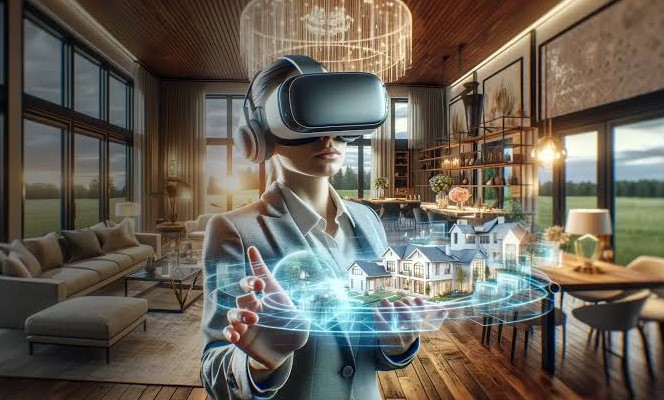
In recent years, digital technology has revolutionized how people experience travel, education, and cultural exploration. Virtual tours have emerged as a powerful tool that allows users to explore destinations, museums, historical sites, and natural landscapes from the comfort of their homes. By combining 360-degree imagery, interactive maps, and augmented reality elements, virtual tours provide an immersive experience that simulates physical presence while offering unprecedented accessibility. As technological advancements continue to improve visual quality and interactivity, these digital experiences are transforming the way people discover the world and interact with information, creating new opportunities for education, tourism, and marketing.
The Evolution of Virtual Tours
The concept of virtual exploration has evolved significantly over the past few decades. Early iterations relied on static images and simple panoramas, offering limited interactivity. While these provided basic visual references, they lacked the immersive quality necessary to replicate real-world experiences.
The rise of high-resolution cameras, 3D modeling, and panoramic video technology transformed this landscape. Today, virtual tours integrate multiple media formats, including 360-degree videos, interactive hotspots, audio guides, and augmented reality overlays. These elements work together to create realistic, navigable environments that allow users to explore spaces in detail.
Enhancing User Engagement Through Interactivity
Interactivity is a defining feature of modern virtual tours. Users can navigate at their own pace, zoom into specific features, or trigger information pop-ups that provide context about exhibits, landmarks, or natural phenomena. Some platforms integrate gamification, quizzes, or guided storytelling to further enrich the experience.
Education has benefited significantly from these innovations. Students can virtually visit archaeological sites, historic landmarks, or scientific research centers without leaving the classroom. This access enhances engagement and deepens understanding by providing experiential learning opportunities that were previously inaccessible due to logistical, financial, or safety constraints.
Tourism and hospitality industries have also embraced virtual tours as a marketing tool. Hotels, resorts, and travel agencies offer immersive previews of accommodations and attractions, enabling potential visitors to make informed decisions. By showcasing amenities and surrounding areas in a realistic format, businesses can enhance customer confidence and drive bookings.
Applications and Benefits Across Industries
Virtual tours are not limited to tourism and education; they have wide-ranging applications across various sectors.
Real estate is one of the earliest industries to adopt virtual tours for commercial benefit. Prospective buyers can explore properties in detail, assess layouts, and visualize interior design without physically visiting multiple locations. This reduces travel time and accelerates decision-making, especially for international buyers or clients with limited availability.
Museums and cultural institutions leverage virtual tours to expand audience reach. By digitizing exhibitions, institutions allow global visitors to access artwork and historical artifacts, promoting cultural education and appreciation. Virtual tours also provide accessibility for individuals with mobility challenges, ensuring that inclusive experiences are available to all audiences.
Corporate and industrial sectors utilize virtual tours for training, onboarding, and facility walkthroughs. Employees can navigate complex machinery, laboratories, or warehouses remotely, learning operational procedures in a safe, controlled environment. This reduces training costs and enhances knowledge retention while mitigating risk in high-stakes settings.
Environmental organizations and conservation projects use virtual tours to showcase natural habitats, wildlife, and ecological initiatives. These experiences raise awareness about climate change, endangered species, and sustainable practices, fostering global engagement and support without disturbing sensitive ecosystems.
Cost efficiency and scalability are additional benefits. Unlike physical travel or on-site engagement, virtual tours can be produced once and accessed repeatedly by an unlimited number of users. This scalability provides long-term value and maximizes return on investment for businesses and institutions.
Challenges and Future Innovations
While virtual tours offer numerous advantages, they are not without challenges. High-quality virtual experiences require advanced equipment, including 360-degree cameras, drones, and specialized software, which can involve substantial upfront investment. Additionally, internet bandwidth and device compatibility may affect user experience, particularly in regions with limited connectivity.
Privacy and security considerations also come into play, especially for virtual tours that showcase private properties, sensitive sites, or proprietary corporate environments. Proper data protection measures and controlled access are necessary to mitigate risks.
Looking ahead, the integration of artificial intelligence, augmented reality (AR), and virtual reality (VR) will further enhance virtual tour experiences. AI-driven personalization could tailor tours to individual interests, while AR overlays could provide dynamic contextual information, and VR headsets could offer fully immersive 3D exploration. Haptic feedback and spatial audio technologies are also on the horizon, promising to replicate tactile and auditory sensations for an even more realistic experience.
Moreover, collaborative virtual tours are emerging as a social tool. Multiple users can explore a site simultaneously, interacting with each other and participating in guided group experiences. This social dimension adds engagement and community value, opening new possibilities for remote tourism, education, and professional collaboration.
The rise of virtual tours is redefining how people engage with destinations, cultural institutions, and educational content. By combining high-quality visuals, interactive features, and immersive technology, virtual tours offer a versatile platform for exploration, learning, and business engagement. As AI, VR, and AR continue to enhance these experiences, virtual tours will become increasingly sophisticated, providing richer, more accessible ways to explore the world. Ultimately, the continued evolution of virtual tours promises to transform traditional modes of exploration, offering a convenient, engaging, and innovative alternative to physical travel.
