You are standing at the airport baggage carousel, watching the crowd thin out as the conveyor belt slows to a grinding halt. Your suitcase is nowhere to be seen. A wave of helplessness hits your stomach—a feeling shared by millions of travelers every year.
A few years ago, during a hectic tech conference transfer, that exact nightmare happened to me. But instead of panicking at the lost luggage counter, I pulled out my phone, smiled, and told the airline agent exactly which terminal, floor, and baggage room my suitcase was sitting in.
Over my decade-long journey evaluating consumer hardware and wireless networks, I have witnessed smart trackers evolve from quirky, unreliable Bluetooth keyfinders into sophisticated, global recovery networks. Today, these tiny discs are fundamentally rewriting the rules of personal security and asset protection.
Whether you are a chronic key-loser or a frequent flyer looking to safeguard your expensive gear, let’s explore how these intelligent devices work, how to choose the right network, and how to use them safely in 2026.
The Invisible Mesh: How Smart Trackers Actually Work
To understand how a tiny device with a battery the size of a coin can broadcast its location across thousands of miles, let’s use a simple analogy. Think of a smart tracker like a message in a bottle thrown into a massive, crowded digital ocean.
The tracker itself does not have a built-in GPS chip or a costly cellular data plan; doing so would drain its tiny battery in a matter of days. Instead, it constantly whispers a unique cryptographic ping via Bluetooth Low Energy (BLE).
When any stranger walking past happens to have a compatible smartphone in their pocket, their phone securely hears that whisper. The stranger’s phone acts as a digital courier, instantly stamping the location coordinates and uploading them to the cloud. You open your app, and voila—your missing keys appear on the map, even if you are on the other side of the planet.
Choosing Your Digital Ecosystem: Apple vs. Android vs. Tile
The hardware itself is only as powerful as the crowd of smartphones supporting it. When investing in smart trackers, you aren’t just buying a piece of plastic; you are choosing a specific crowdsourced locator network.
1. The Global Giants: Apple Find My Network
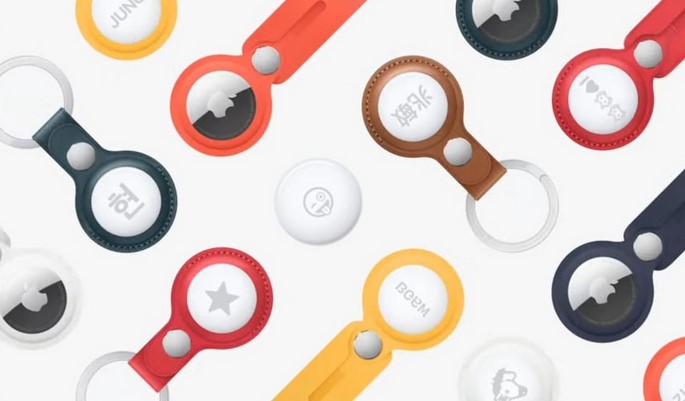
Apple’s ecosystem remains an absolute powerhouse due to sheer density. Because every active iPhone, iPad, and Mac participates in the network by default, the tracking resolution is incredibly precise. If you lose an item in a bustling city center, chances are an iPhone will pass within thirty feet of it every few seconds.
2. The Open Horizon: Google Find My Device
Google’s refreshed tracking network has leveled the playing field for Android users. Leveraging billions of Android smartphones worldwide, this network provides exceptional coverage. Third-party manufacturers now build custom tracking tags specifically tailored to integrate directly with Android’s native location architecture.
3. The Cross-Platform Veteran: Tile and Life360
Tile pioneered this entire product category. While it doesn’t boast the automatic OS-level integration of Apple or Google, it bridges the gap perfectly for households split between iOS and Android. Its tracking relies entirely on users who have the dedicated app installed, making it highly effective in dense suburban environments.
+--------------------------+-----------------------------------+-----------------------------------+
| Network Platform         | Primary Strength                  | Ideal User Base                   |
+--------------------------+-----------------------------------+-----------------------------------+
| Apple Find My            | Unparalleled global crowd density | Dedicated iOS/Mac users           |
| Google Find My Device    | Massive worldwide Android reach   | Android ecosystem enthusiasts      |
| Tile / Third-Party Open  | True cross-platform versatility    | Mixed-OS households & platforms   |
+--------------------------+-----------------------------------+-----------------------------------+
Moving Beyond Bluetooth: The Magic of Ultra-Wideband (UWB)
If you have ever tried to find your wallet under a couch cushion, you know standard Bluetooth only tells you that the item is somewhere in the room. This is where Ultra-Wideband (UWB) technology completely changes the game.
Unlike Bluetooth, which estimates distance based on signal strength, UWB operates like a micro-radar system. It measures the exact time it takes for radio waves to travel between your phone and the tracker.
This enables a feature known as Precision Finding. Your smartphone screen transforms into a live compass, showing you exact directional arrows and distance tracking down to the literal inch. It can literally guide your hand straight to the exact crevice where your car keys are hiding.
Insider Insights: Privacy, Stalking Protection, and Safety
💡 Pro Tip: Look for Anti-Stalking Standardization
In 2026, the tech industry has finally unified its security protocols. Major platforms now utilize cross-platform unwanted tracking alerts. If an unknown tracker (regardless of whether it’s an AirTag or an Android-compatible badge) moves with you over a certain duration, your smartphone will alert you automatically and help you locate it.
While I love this technology for securing backpacks and camera gear, we have to talk about the critical dark side: unwanted tracking. Because these devices are so small and effective, bad actors have occasionally weaponized them for stalking.
When setting up your tracking tags, always ensure your phone’s emergency location alerts are turned on. If you ever discover an unknown tracker tucked inside your belongings, you can quickly disable it by twisting the back cover open and popping out the coin-cell battery.
Maximizing the Utility of Your Trackers
To get the absolute most out of your hardware investment, don’t just throw them loosely into a pocket. Here are a few strategic deployment strategies I use personally:
-
The Luggage Infiltration: Don’t hang your tracker on the outside of your suitcase via a flimsy plastic luggage tag where it can be easily ripped off or discarded by baggage handlers. Instead, tuck it deep inside the inner lining fabric or sew it into an interior pocket.
-
The Commuter Bicycle Hidden Mount: Bicycle theft is rampant in urban environments. Specialized manufacturers now create water-bottle cages and reflector mounts with hidden, hollow compartments designed specifically to camouflage a tracking tag out of plain sight.
-
The Digital Wallet Insert: Standard tracking pucks are too thick for a slim wallet. Opt for specialized, credit-card-shaped smart trackers that slide seamlessly into card slots without creating an awkward, bulky bulge.
The Ultimate Peace of Mind
At the end of the day, smart trackers are not a magic forcefield that prevents theft from happening in the first place. What they do provide, however, is an invaluable layer of visibility in an unpredictable world.
They take the frantic guesswork out of daily life, saving you from those stressful mornings spent turning your house upside down looking for your keys, or those anxious flights wondering if your luggage made the connection. For a relatively small one-time investment, you are buying structural peace of mind—and in our fast-paced modern lives, that is worth every penny.
Over to You!
Have you already integrated smart trackers into your daily routine, or are you still on the fence about data privacy concerns? Have you ever had a crazy experience where a tracking tag actually saved your lost gear? Share your stories and drop your questions in the comments below—I’d love to hear how you keep your belongings safe!
